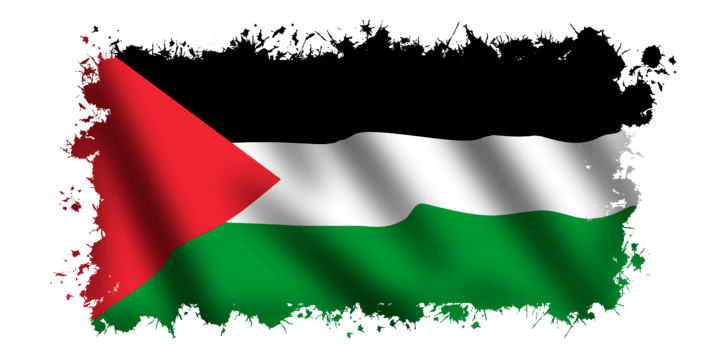
The Palestinian flag is more than a combination of colors stitched into fabric; it is a visual narrative of identity, struggle, and collective memory. Instantly recognizable with its bold black, white, green, and red design, the flag carries layers of historical meaning that connect Palestine to a wider Arab story while also expressing a distinctly Palestinian experience.
Origins and Design
The Palestinian flag is rooted in the Pan-Arab colors, a set of four hues that appear in many Arab national flags. Its design features three horizontal stripes black on top, white in the middle, and green at the bottom—with a red triangle extending from the hoist side. This configuration closely resembles the flag of the Arab Revolt of 1916, which symbolized resistance against Ottoman rule and aspirations for Arab independence.
Palestinians formally adopted this flag in the mid-20th century as a national symbol, and it later became associated with the Palestine Liberation Organization (PLO). Over time, it evolved from a political emblem into a broader cultural and emotional marker for Palestinians both within historic Palestine and across the global diaspora.
Meaning of the Colors
Each color on the Palestinian flag carries symbolic weight:
- Black is often associated with periods of hardship and mourning, reflecting the painful chapters of Palestinian history.
- White symbolizes hope, peace, and the desire for a just future.
- Green represents the land itself—fertility, agriculture, and a deep connection to the soil.
- Red stands for sacrifice and resilience, honoring those who struggled and continue to struggle for self-determination.
Together, these colors form a narrative that balances loss and hope, memory and aspiration.
A Flag Beyond Borders
One of the most striking aspects of the Palestinian flag is how widely it is displayed beyond the territory it represents. From refugee camps to major world capitals, the flag is carried in demonstrations, hung from balconies, painted in murals, and worn as clothing or accessories. For many Palestinians living in exile, the flag functions as a portable homeland—a way to assert identity in places far from ancestral towns and villages.
At the same time, the flag has become a global symbol recognized by people who may not be Palestinian but who view it as an emblem of resistance, human rights, or solidarity with an oppressed people. This international visibility has made the flag both powerful and, at times, controversial.
Cultural and Emotional Significance
Beyond politics, the Palestinian flag appears in poetry, music, visual art, and everyday life. Children draw it in school notebooks, artists reinterpret it in contemporary forms, and families display it during weddings, funerals, and national commemorations. It marks moments of joy and grief alike, reinforcing a shared sense of belonging across generations.
For many Palestinians, seeing the flag raised is an act of affirmation—proof that their identity persists despite displacement, occupation, or statelessness. In this way, the flag is not only about territory or governance, but about dignity and recognition.
An Enduring Symbol
Flags often outlive the circumstances that created them, and the Palestinian flag is no exception. Its meaning continues to evolve as history unfolds, shaped by new generations who inherit both its symbolism and its unfinished story. Whether viewed as a national banner, a cultural icon, or a political statement, the Palestinian flag remains a potent reminder that symbols can carry the weight of a people’s past while pointing toward their hopes for the future.
In its simple geometry and striking colors, the Palestinian flag tells a complex story—one of endurance, identity, and the enduring human desire to be seen and acknowledged.