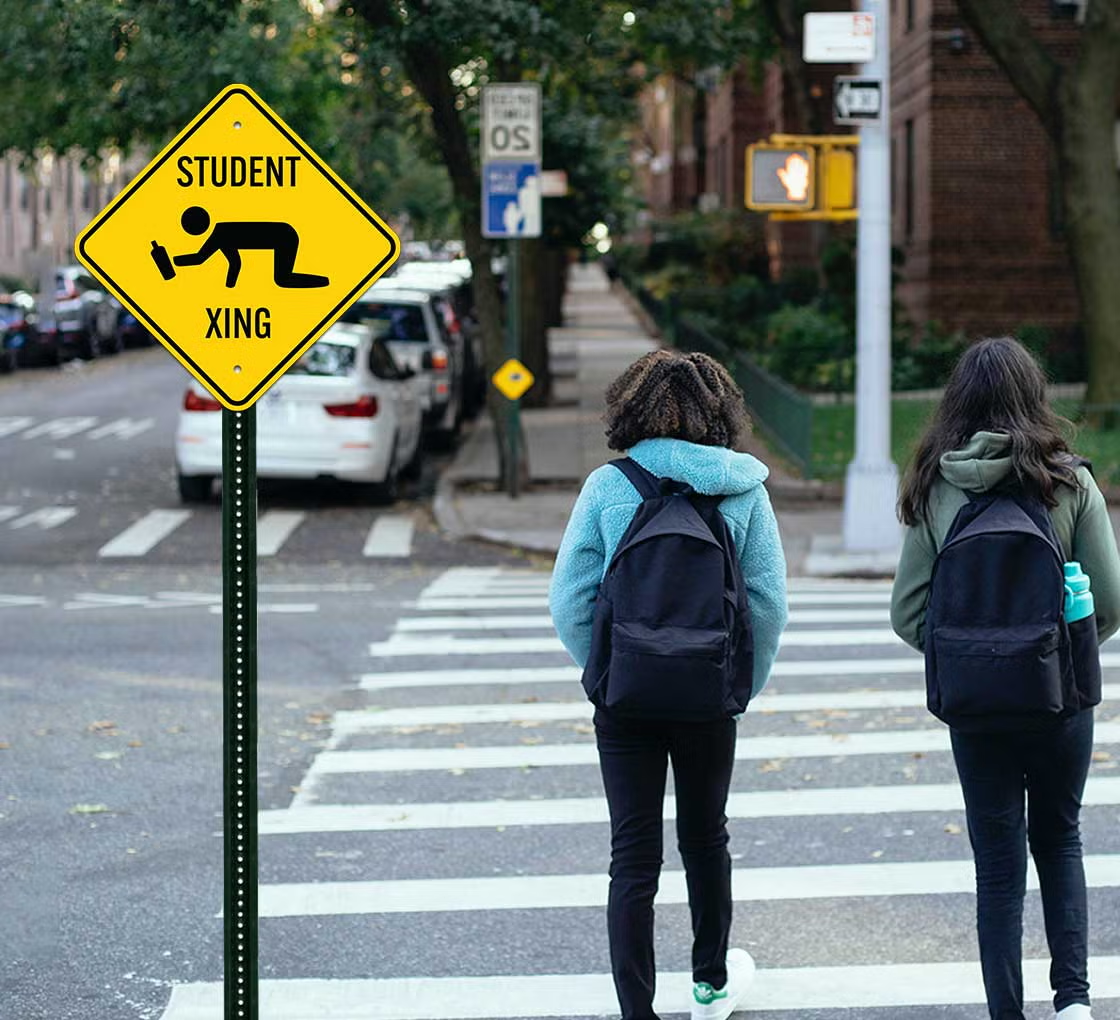
Driving is full of symbols. Some you recognize instantly stop signs, speed limits, or yield markers. But every so often, a bright yellow diamond catches your eye with the word “Xing” stamped boldly across it. You slow down, because you know it signals a crossing ahead. These Xing signs are more than just road decorations. They’re lifesaving warnings designed to keep drivers, pedestrians, and even animals safe.
In this guide, we’ll break down what a Xing sign is, its history, types, and why it plays a crucial role in road safety.
The History and Origin
The term “Xing” is simply a shortened form of “crossing.” Road engineers and sign designers started using it decades ago to save space on road signs, especially when visibility mattered more than length. The abbreviation ensures drivers can read the warning at a glance without confusion.
In the United States, Xing signs became common in the mid-20th century as part of standardized traffic signage. Before that, wording varied from town to town. Over time, the Manual on Uniform Traffic Control Devices (MUTCD) cemented the abbreviation, ensuring consistency across states.
Interestingly, other countries take different approaches. Some spell out the word completely, while others rely on symbols instead of text. This variation shows how language, culture, and visibility influence design.
Common Types
Xing signs aren’t one-size-fits-all. They adapt to different situations Let’s take a look at the typical spots where crossings happen. Here are the ones you will often come across.
Pedestrian Xing Sign
- Found in urban areas, near sidewalks, and at intersections.
- Usually features a walking figure.
- Alerts drivers to watch for people crossing unexpectedly.
- Critical in school zones, shopping areas, and busy city streets.
Deer Xing Sign
- Common in rural highways and wooded areas.
- Features the silhouette of a leaping deer.
- A study by the Insurance Institute for Highway Safety shows deer-related accidents peak in autumn, costing millions in damages each year.
School Xing Sign
- Features children figures or “SCHOOL XING.”
- Often painted directly on the road in addition to posted signs.
- Associated with lower speed limits to protect children.
Railroad Xing Sign
- Displays a crossbuck or “RR Xing.”
- Alerts drivers to train crossings, typically accompanied by blinking red lights and barriers.
- Ignoring this sign can have devastating consequences.
Bicycle Xing Sign
- Appears near bike paths or shared roadways.
- Alerts drivers to cyclists entering or crossing traffic.
- Crucial in cities that are friendly to cyclists, such as Portland or Amsterdam.
Design and Color of Xing Signs
Most Xing signs share a familiar look:
- Shape: Diamond
- Color: Yellow background with black lettering or symbols
- Material: Reflective to ensure nighttime visibility
Some variations exist based on purpose. For instance, school Xing signs often use a fluorescent yellow-green to grab attention.
Here’s a quick comparison table:
| Type of Xing Sign | Color | Common Placement | Symbol/Text |
| Pedestrian Xing | Yellow | City streets, crosswalks | Walking figure |
| School Xing | Yellow-Green | Near schools | Children figures |
| Deer Xing | Yellow | Rural highways | Deer silhouette |
| Railroad Xing | White/Yellow | Train tracks | “RR Xing” or crossbuck |
| Bicycle Xing | Yellow | Bike paths, shared roads | Bike figure |
Legal Importance of Xing Signs
Traffic laws treat Xing signs seriously. Ignoring one can lead to:
- Traffic citations or fines
- Increased liability in accidents
- Higher insurance premiums
For example, in many U.S. In several states, not giving way to pedestrians at a crossing may lead to fines that can reach $500.A case in New York showed how ignoring a school Xing led to an accident that cost the driver both legally and financially.
The legal weight behind these signs underscores their role as more than “suggestions.” They are enforceable warnings.
Safety Tips for Drivers and Pedestrians
Seeing a Xing sign means one thing caution. Here’s how to respond:
Drivers:
- Slow down immediately.
- Scan the road ahead and both sides.
- Be prepared to stop quickly.
- At night, be careful when using high beams to look for wildlife.
Pedestrians and Cyclists:
- Always make eye contact with drivers before crossing.
- Don’t assume vehicles will stop just because of a Xing sign.
- Stay visible by wearing bright clothing at night.
Wildlife Crossings:
- Be extra alert during dawn and dusk.
- If you see one animal cross, expect more. Deer often travel in groups.
Xing Signs Around the World
Various areas modify Xing signs to suit their surroundings:
- In Australia: it’s typical to see Kangaroo Xing signs in the countryside.
- Canada: Moose Xing signs dominate northern highways.
- Japan: School children Xing signs are highly detailed and colorful.
- United Kingdom: More reliance on painted road markings than on the word “Xing.”
This diversity reflects how road safety adapts to local wildlife, culture, and driving norms.
The Future of Xing Signs
Technology is reshaping how drivers see and respond to warnings. Future Xing signs may include:
- Digital road signs that flash warnings in real-time.
- Smart sensors detecting pedestrians or wildlife.
- Integration with GPS and self-driving cars to enhance driver awareness.
Imagine your car alerting you to a deer Xing before you even see the sign. That future is closer than most people think.
FAQs
Why do we say Xing instead of crossing?
Because it’s shorter, quicker to read, and fits better on signs.
Are Xing signs legally binding?
Yes. Drivers must obey them, and failure to do so can lead to penalties.
Where are Xing signs most commonly found?
Near schools, crosswalks, railroad tracks, rural highways, and wildlife areas.
Do all countries use Xing signs?
No. Some rely on full words or pictograms instead.
Can Xing signs vary in color?
Yes. For example, school Xing signs use fluorescent yellow-green instead of standard yellow.
Conclusion
Every Xing sign on the road serves a purpose. Whether it warns you about children heading to school, a deer ready to leap, or an oncoming train, these signs protect lives daily. They’re simple yet powerful reminders to slow down, stay alert, and share the road responsibly.
Ignoring a Xing sign isn’t just risky it’s reckless. Respecting them means protecting yourself, your passengers, and everyone sharing the road.